
Trailer editing and a bag of tricks
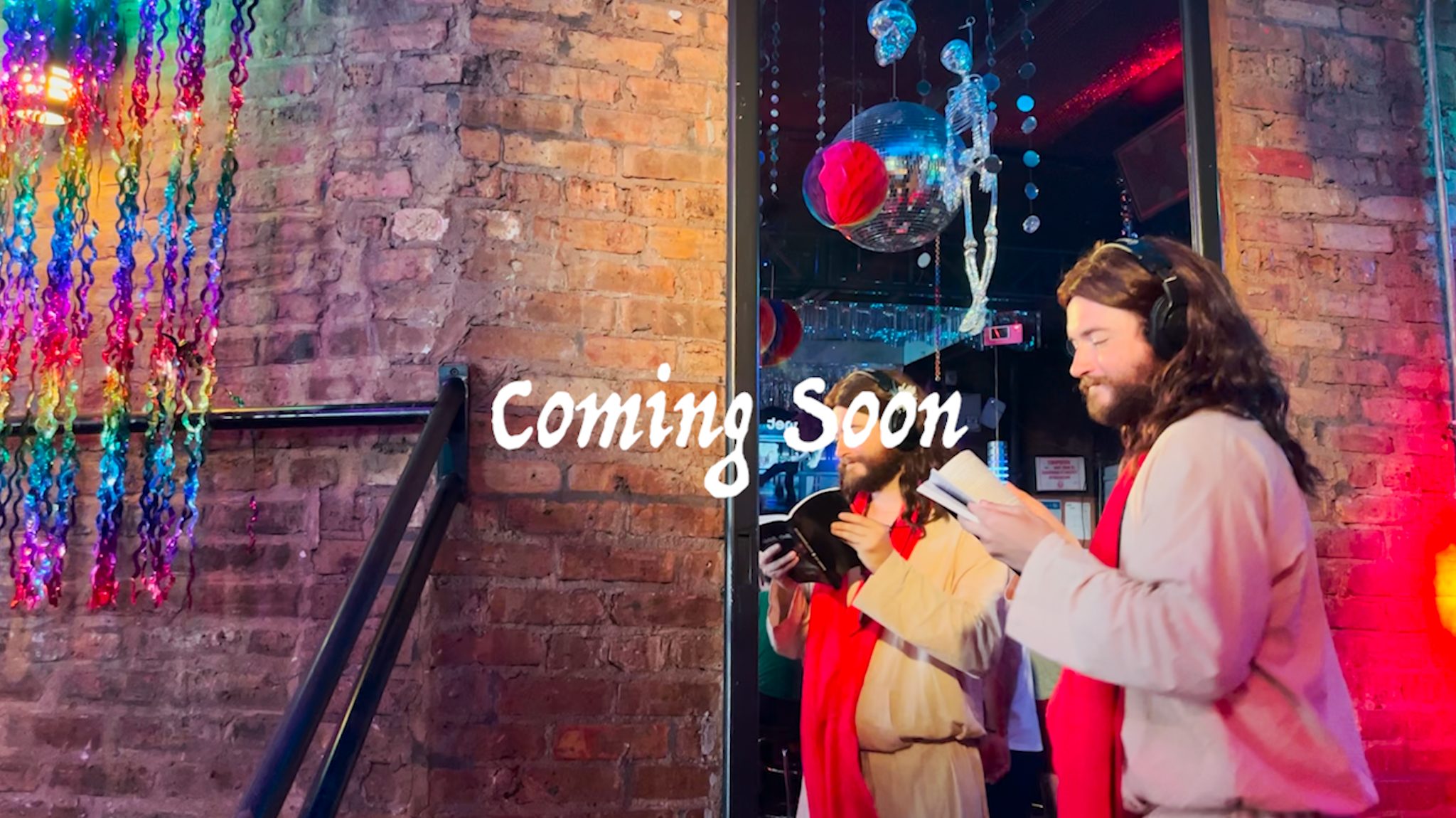
I was finishing the edit on Jesus Christ, Diva | Official Trailer #2 and reviewing it again when something clicked.
There was a section built around a musical crescendo. The music rises, the motion rises with it, the action starts to accelerate, and then the trailer cuts at the point where the music feels like it should resolve.
That cut creates a cliff.
From there, the energy can continue through a sequence of shorter clips: cut, continued action, music, cut, continued action. The original crescendo creates the momentum, but the editing gets to spend that momentum afterward. A character moves through one shot, another motion answers it in the next, and the cuts can start landing against the beat instead of simply following the chronology of a scene.
Watching it back, that felt like the first trailer-editing technique I had consciously identified as something worth keeping in a bag of tricks.
It seems obvious once written down, but that is part of learning any form. Something works instinctively first, and then later you recognize the structure underneath it well enough to try it again.
Jesus Christ, Diva | Official Trailer #1 worked differently. That trailer was closer to a continued flow of action, almost like a compressed sequence from the film. Its rhythm mostly came from continuing forward.
Trailer #2 has been teaching me another structure.
It can stay with a scene for longer, giving the audience enough time to understand the situation, and then use the musical crescendo as a hinge into something faster.
Sustained scene. Rising tension. Cut. Action sequence.
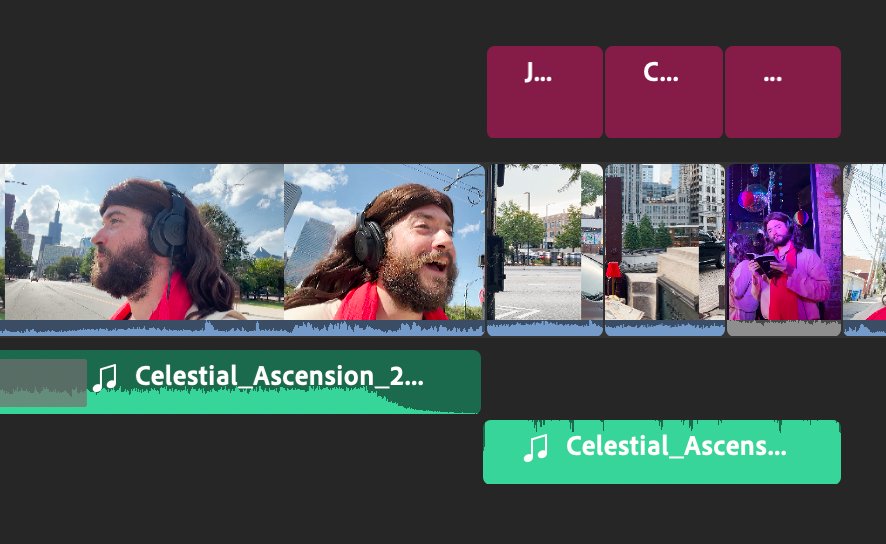
Once the first section has established the character, situation, or tone, the second half does not have to explain as much. Short clips can begin working almost like impressions. A look. Someone moving. A reaction. A crowd. Jesus turning around. The meaning comes partly from the accumulated motion and from the relationship created between the images.
That is also making trailer editing feel increasingly separate from editing the film itself.
A film usually has to care about how one moment leads into another. A trailer can sometimes care more about what two moments feel like when they are placed next to each other. The cut itself becomes part of the storytelling.
There are probably a lot of other tools like this waiting to be identified.
A punchline that opens the trailer before revealing context. Repeated dialogue across unrelated scenes. Silence used as the break instead of a musical peak. A series of disconnected images that gradually reveal what the movie is about. One sustained scene carrying almost the entire trailer.
For now, though, crescendo → cut → continued action feels like the first one I can name.
Not a formula.
Just a technique that worked, and something worth remembering the next time there is a timeline full of footage and a piece of music underneath it.
About this post

Comments
Join the conversation.
Loading…