
Why I’m making Jesus Christ, Diva
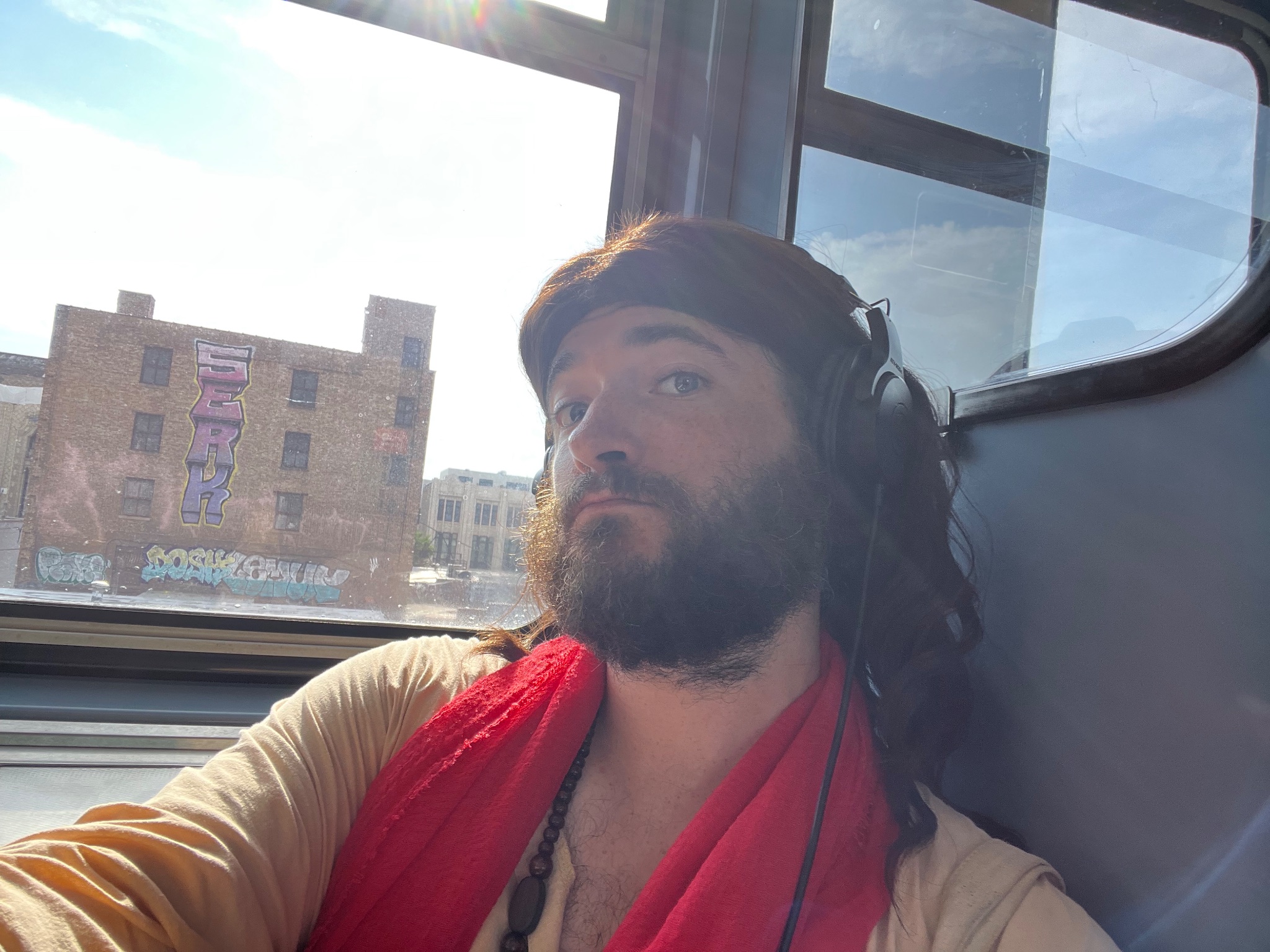
Jesus Christ, Diva started as an idea while dancing at Andersonville's SoFo Tap on a Chicago Friday night in January, earlier this year. It was bear night and I was using the time to let my mind wander and the music tell my body what to do.
It seemed funny to imagine someone auditioning for RuPaul’s Drag Race as Jesus Christ. There is obviously a lot to pull from for a drag character: the robes, the hair, the miracles, the martyrdom, the resurrection, and about two thousand years of extremely recognizable imagery. The basic premise was that the character would enter the show pretending to be Jesus Christ and, somewhere along the way, become convinced that they actually were Jesus Christ.
At first, it seemed like a short film.
Around the same time, I had just published two books for fun, as an experiment in self-publishing. That process changed the way ideas were beginning to feel. A story didn’t necessarily need to wait for the form it originally arrived in. A film idea could become a book. A book could later become something else. Anything is possible in text.
Writing removed most of the practical problems. Jesus could wander through Manhattan, perform in a nightclub, believe he had returned to save humanity, or do basically anything else without requiring actors, locations, equipment, or much investment.
So over the winter and early spring, the world and possibility of Jesus Christ, Diva came clearer into focus. It could be a fun and goofy project, but also a real commentary on our current political and media environment. It felt possible.
The character eventually landed in Hell’s Kitchen in New York, which felt like a real place where this particular version of Jesus might plausibly surface. The original Drag Race joke started expanding into a character, a surrounding world, and an actual story.
At the same time, I was doing standup comedy in my own personal life, as a means of self-expression and an experiment in artistic format.
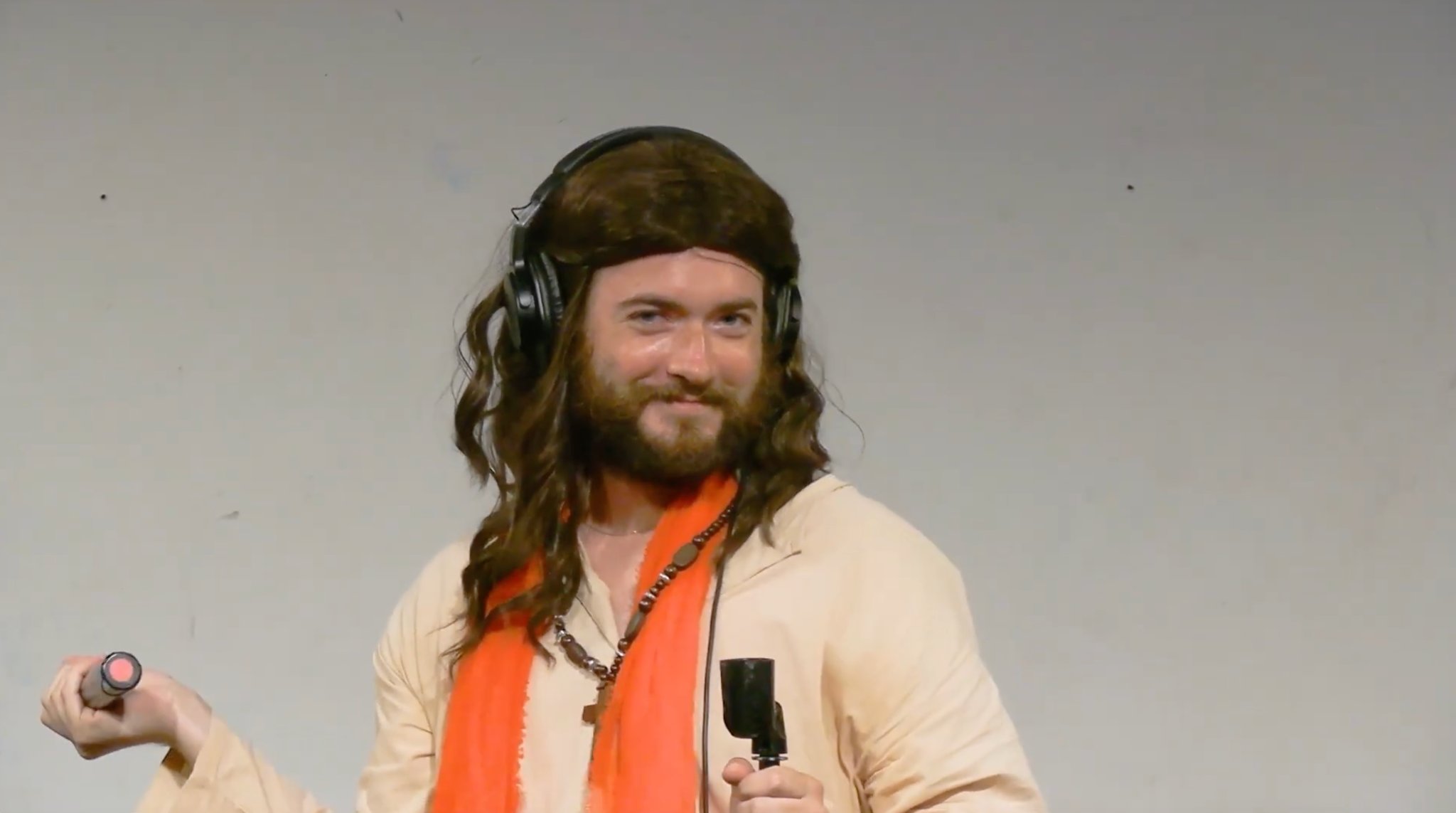
Eventually those things crossed too. Jesus could also be a standup comedian. If comedy existed inside the book, some version of it could be performed in real life, filmed, and released online, just as I was doing in my own experiment in the form.
That was probably the first point where Jesus Christ, Diva started becoming less like one piece of media and more like a collection of connected things.
The social media didn’t have to advertise the story. It could be part of the story. A standup set could exist inside the same world. A short video could contain another piece of the character. The book could tell one version while something related happened somewhere else. The timeline doesn't matter, because we live in an algorithmic world.
This was already part of a larger area of thinking happening at the time. In Creativity, Intelligence, and the Human Experience: AI’s Role in the Work of Democracy, I had been writing about information, expression, technology, and the way ideas move between people. Part of that involved memetic information: the ability of an image, phrase, symbol, joke, or small piece of media to carry much more meaning than its literal contents because the audience already understands the surrounding context.
That feels especially relevant to the way media works now.
A meme can communicate a political idea faster than a television segment. A few seconds of video can become the way millions of people understand an event. A story might be encountered through a TikTok clip, a screenshot, a podcast, an Instagram post, a headline, a book, a song, or a conversation, with each piece contributing something slightly different.
Stories already move across platforms because people do.
So why should the narrative itself necessarily stay in one place?
By early summer, the book was outlined, the writing had started, and a social media presence had begun forming around the character.
There still wasn’t really a film.
Then Andersonville's Midsommarfest started being built directly outside my apartment.
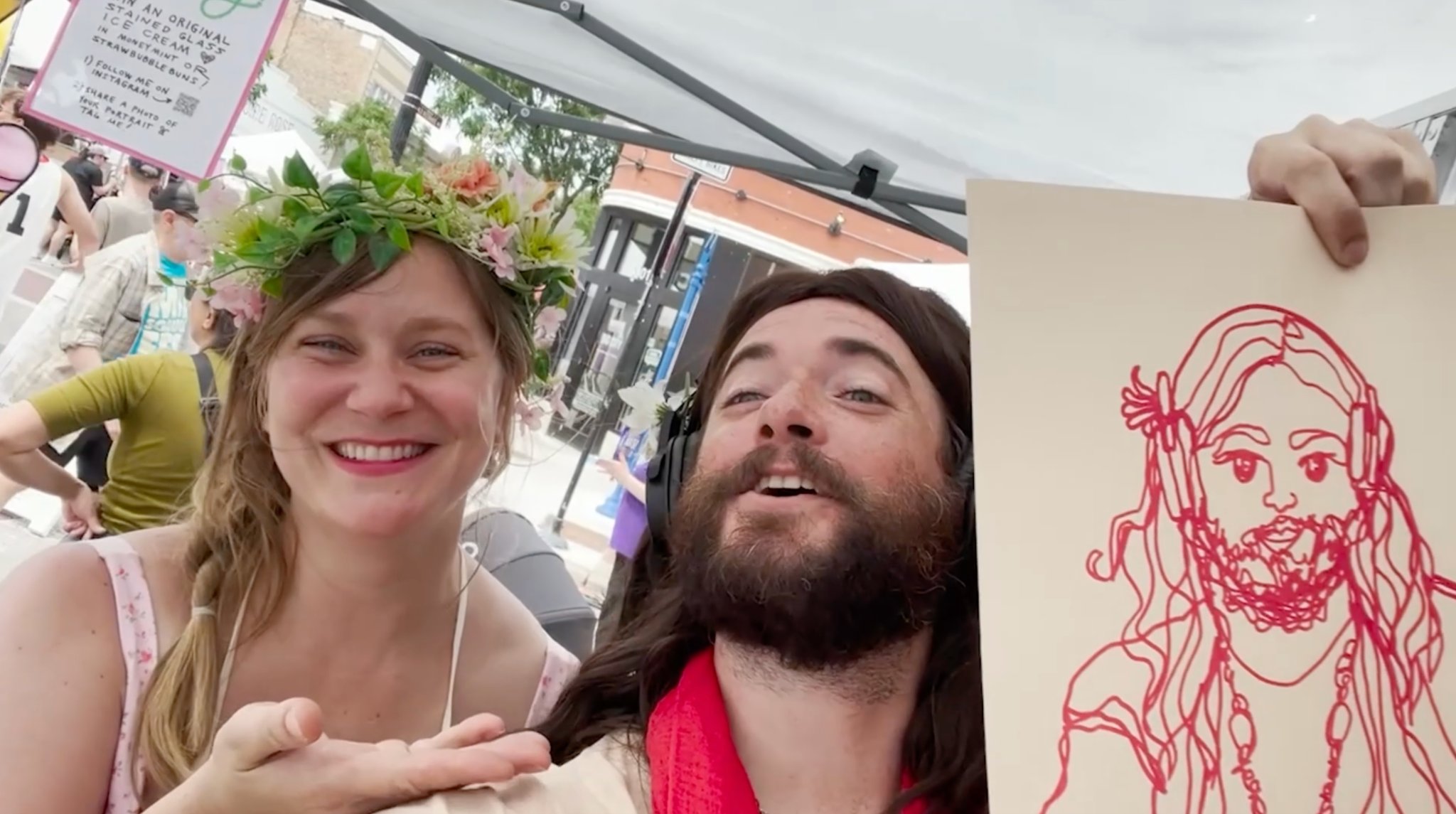
The streets closed. Stages went up. Thousands of people were coming. There would be performers, drag shows, bars, music, storefronts, churches, strangers, people drinking, people dancing, and basically everything needed for Jesus to walk around inside a very crowded version of Chicago.
It suddenly seemed like there might be a supplementary short film sitting right outside.
So on the first day of Midsommarfest, I got into costume and started filming.
There wasn’t much of a plan beyond getting atmosphere and seeing what happened.
That turned out to be useful.
People gave the character things that would have been difficult to predict. There were conversations, reactions, and moments that became funny simply because they happened. Sometimes people seemed to understand that Jesus was a character. Sometimes they seemed genuinely unsure at what was happening.
Once the footage was back on a computer, there were scenes in it.
And once there were scenes, there might be a film.
This reminded me of something from earlier this spring, that had already made this way of working seem like a real means to operate.
In April, I saw Pete Ohs’s Erupcja at the Music Box in Chicago and loved it. At the time, I described it as a beautiful, airy film with very “hangout” vibes, held together by chance moments, interesting camera work, and the feeling of exploring a city without being particularly concerned about time other than spending it meaningfully.
Starring Charli XCX, Jeremy O. Harris, and a loose cast of characters, Erupcja showed how much a film could become from relatively little: a few people, a few scenes, and the simple act of wandering between places. The story seemed to emerge from the accumulation of those moments rather than from an elaborate plot imposed on them..
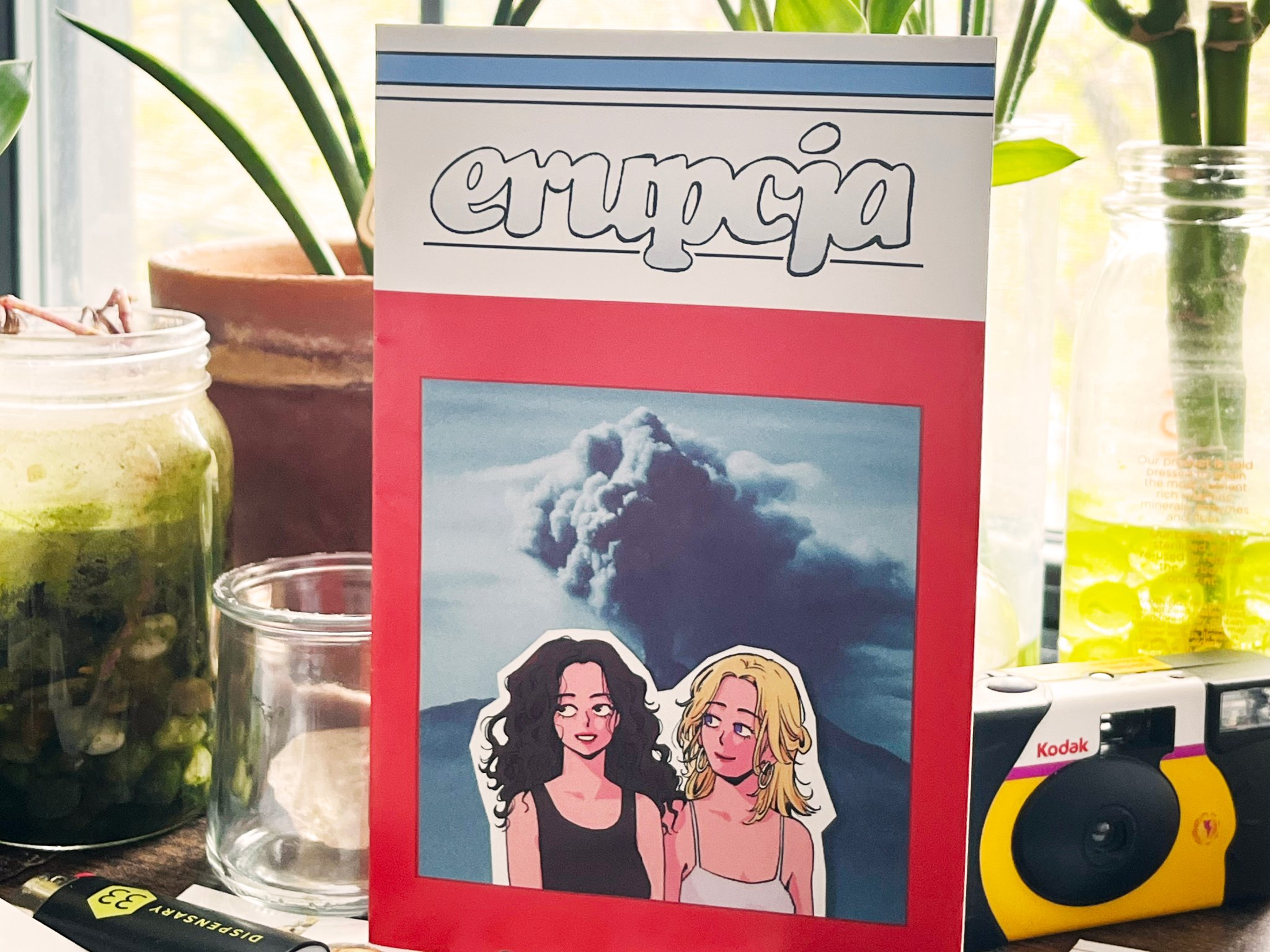
After the screening, Pete and I talked about how the film could look cinematic while still feeling immediate and run-and-gun. The camera he had used was an older DSLR, which was surprising. Good images have become remarkably accessible. A relatively ordinary camera—or a smartphone—can now produce footage that would have required much more specialized equipment not that long ago.
The part of filmmaking that had always seemed most difficult was the assumption that making a movie required a group of people.
Pete said I basically needed one other person.
The Q&A that night also included an explanation of his approach to story that stayed with me. The metaphor of a table of bubbles. The structure needs to remain light enough for the table to hold it. If the plot becomes too heavy, everything starts serving the machinery of the plot instead of the movie being able to move through the world and respond to what is already there.
That helped put language around what made Erupcja so inspiring creatively.
A conversation can matter. A street can matter. Flowers, shadows, a change in light, somebody appearing unexpectedly—all of those things can contribute to the film without needing to become major plot points.
Another film I love, 2015's Tangerine had a similar feeling. There is a looseness and speed to it that makes the city feel involved in the story. The characters are moving through a real place, and the place is allowed to do some of the work.
That became a very practical way to think about Jesus Christ, Diva.
Chicago didn’t need to be recreated. Chicago was already there.
Every person Jesus encountered didn’t need to be written. Jesus could just encounter people and situations. The world was already built. The camera didn’t really need to disappear either. The entire thing can be completely improvised and its limitations can be allowed for in style.
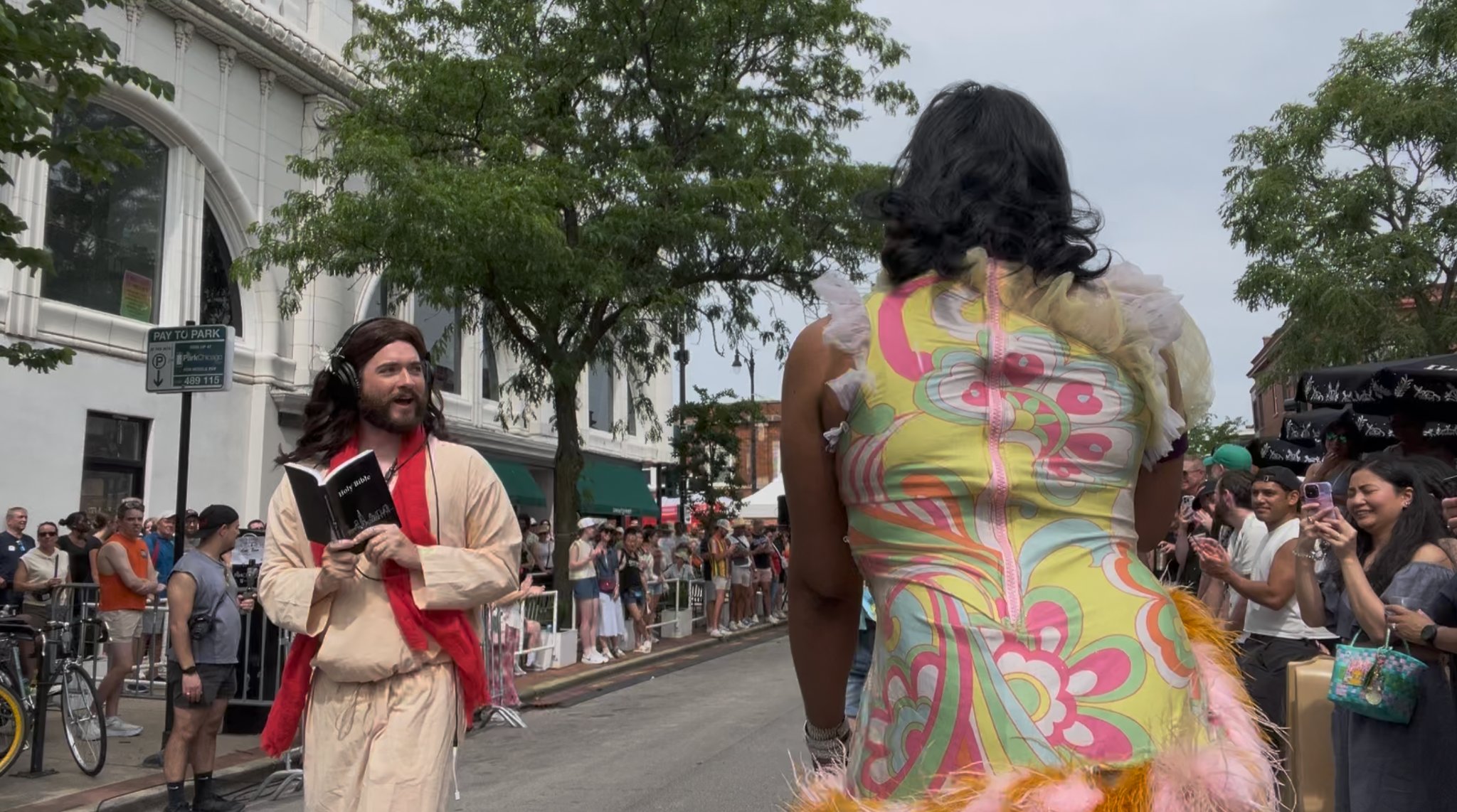
We already live in a world where people constantly film themselves. Everyone carries a video camera. People document going to work, going out, eating, traveling, protesting, performing, talking about politics, talking about themselves, or simply walking around.
So a Jesus who returned to Earth with a mission would probably document it too.
Jesus could vlog. He could tell the story of the film direct to camera.
That gave the film a form that felt natural to the character and to the moment in which the story was being made. The camera could move between something scripted, something documentary-like, something performed, and something that happened because a stranger happened to walk by.
With this story structure in mind, I thought of a few locations that would be busy and contexts that could support a short film. I remembered standup comedy from the book draft and the nights that I had been going to at the beginning of the year. Jesus had to land in Grant Park. Of course.
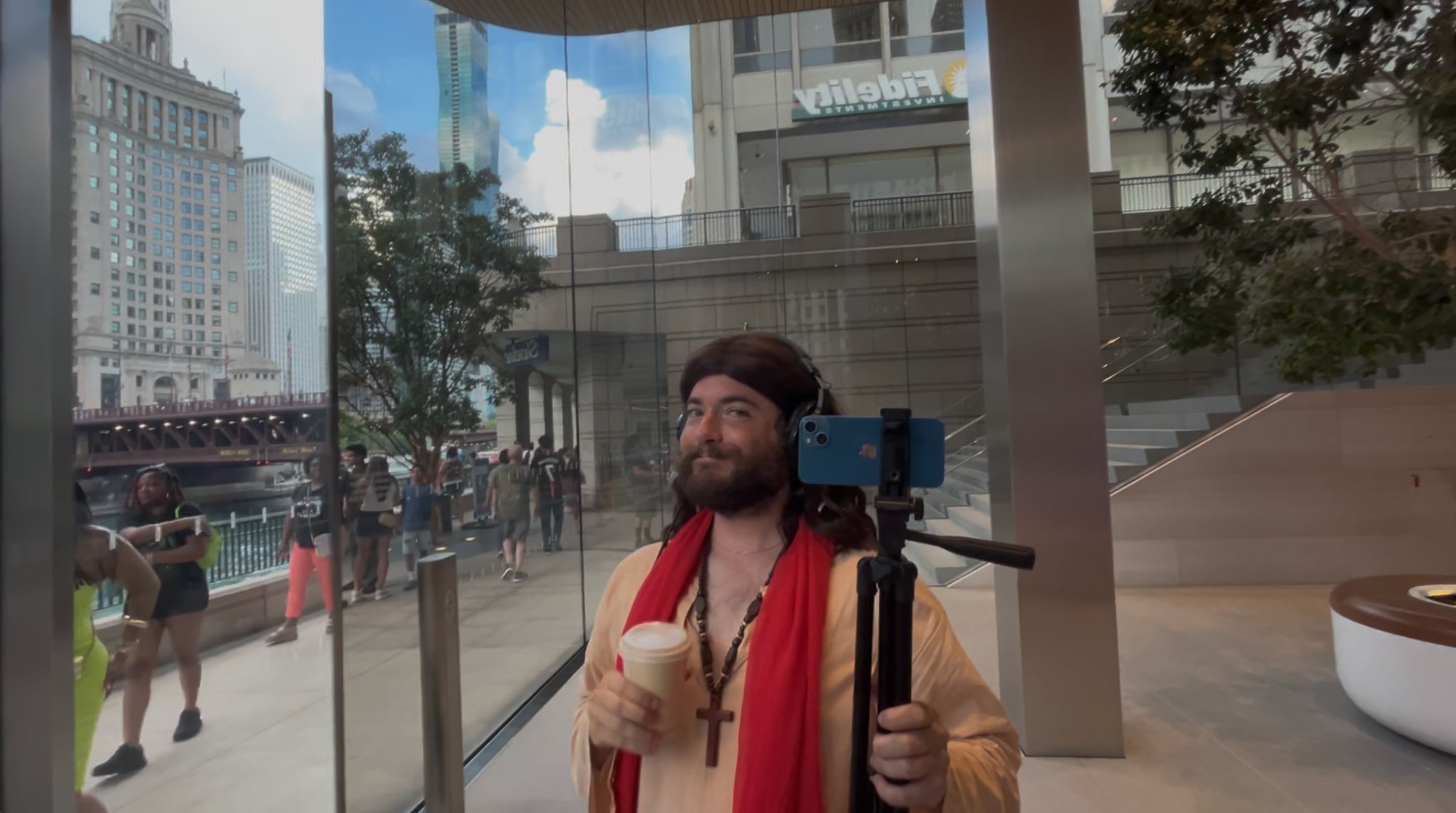
As filming started, the original drag competition story became less important to communicating the idea of the project. A feature film was being made. While silly and a little unserious, a coherent film was appearing with an idea behind it, and that in of itself is serious work. The film "Jesus Christ, Diva" still belongs to the larger Jesus Christ, Diva world, but the Chicago film itself is a much simpler glimpse into the life of Jesus Christ, as told through a few brief summer days and nights on Earth in Chicago, Illinois.
Jesus comes back.
Jesus has a mission.
Jesus walks around Chicago trying to understand what that mission actually means.
Using Jesus as a character also solves a lot of narrative problems immediately. Most people already know who he is. Even without a religious relationship to the character, there is usually some understanding of the imagery, the stories, and what Jesus is supposed to represent.
Very little exposition is required.
That connects back to the idea of memetic information. Jesus may be one of the most recognizable characters and images in human history. Long hair, beard, robe, pose: an enormous amount of context arrives almost immediately.
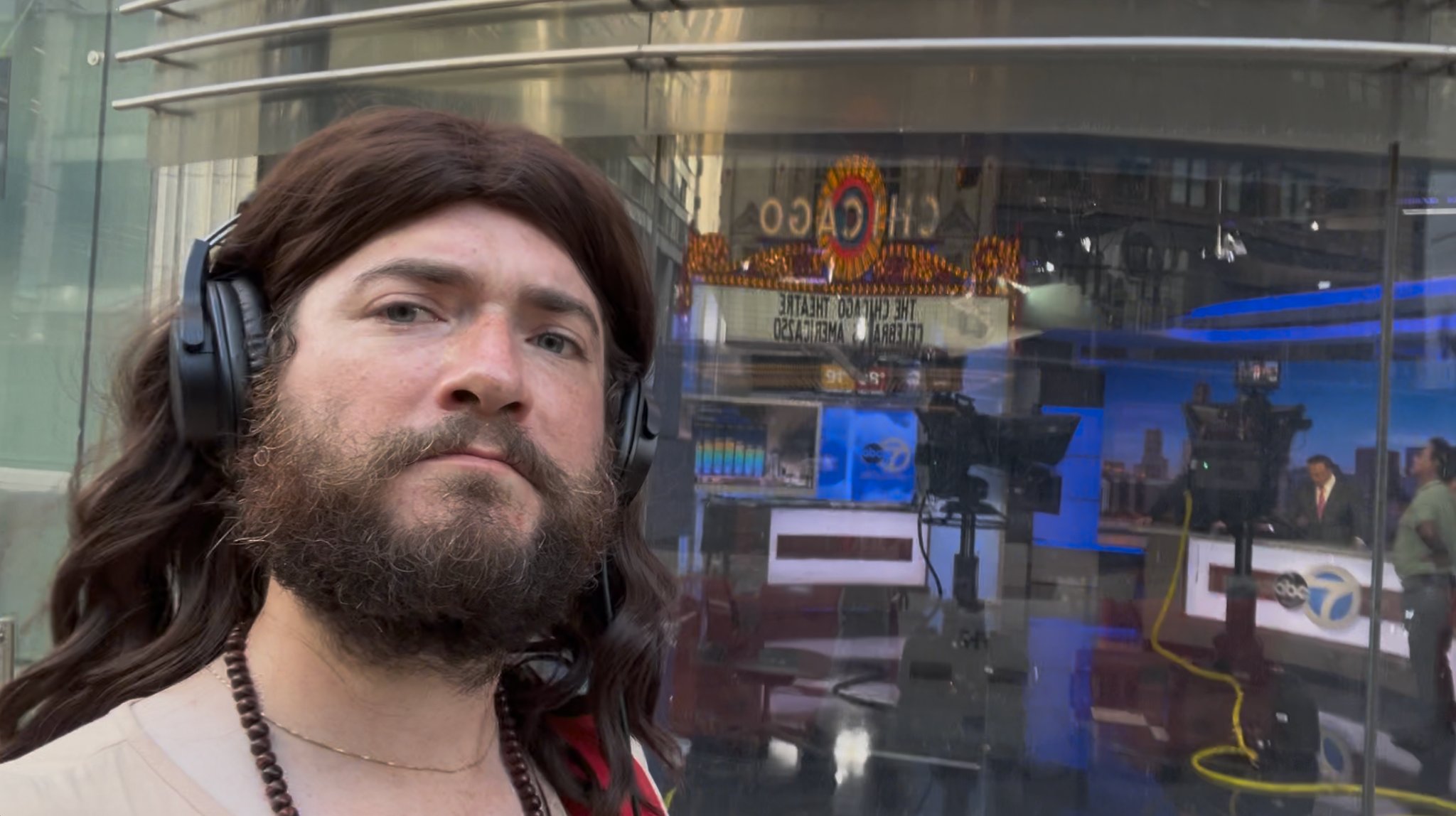
That also makes the political environment surrounding the film increasingly strange.
Religious extremism is no longer something that necessarily presents itself as fringe or distant from ordinary political life. Religious absolutism and efforts to impose specific religious beliefs on other people are openly part of contemporary political discourse. Jesus and Christianity are invoked in actual arguments about power, rights, gender, sexuality, war, law, and who should be allowed to live what kind of life.
In today's society, this has become commonplace enough that it can simply register as normal.
Meanwhile, there is this fairly innocuous little independent comedy where Jesus walks around Chicago, goes to bars, meets drag queens and strangers, makes friends, gets confused, and tries to understand what he is supposed to be doing here.
Both versions of Jesus exist in the same world.
They use the same character.
That feels stranger than Jesus in drag.
A fictional Jesus having a funny conversation in a gay bar can somehow feel culturally provocative while Jesus is also being invoked completely seriously in struggles over actual political power. That is part of the reality of now. This is a cultural phenomenon that has existed since the beginning of time and has been expressed and explored through art for almost as long.
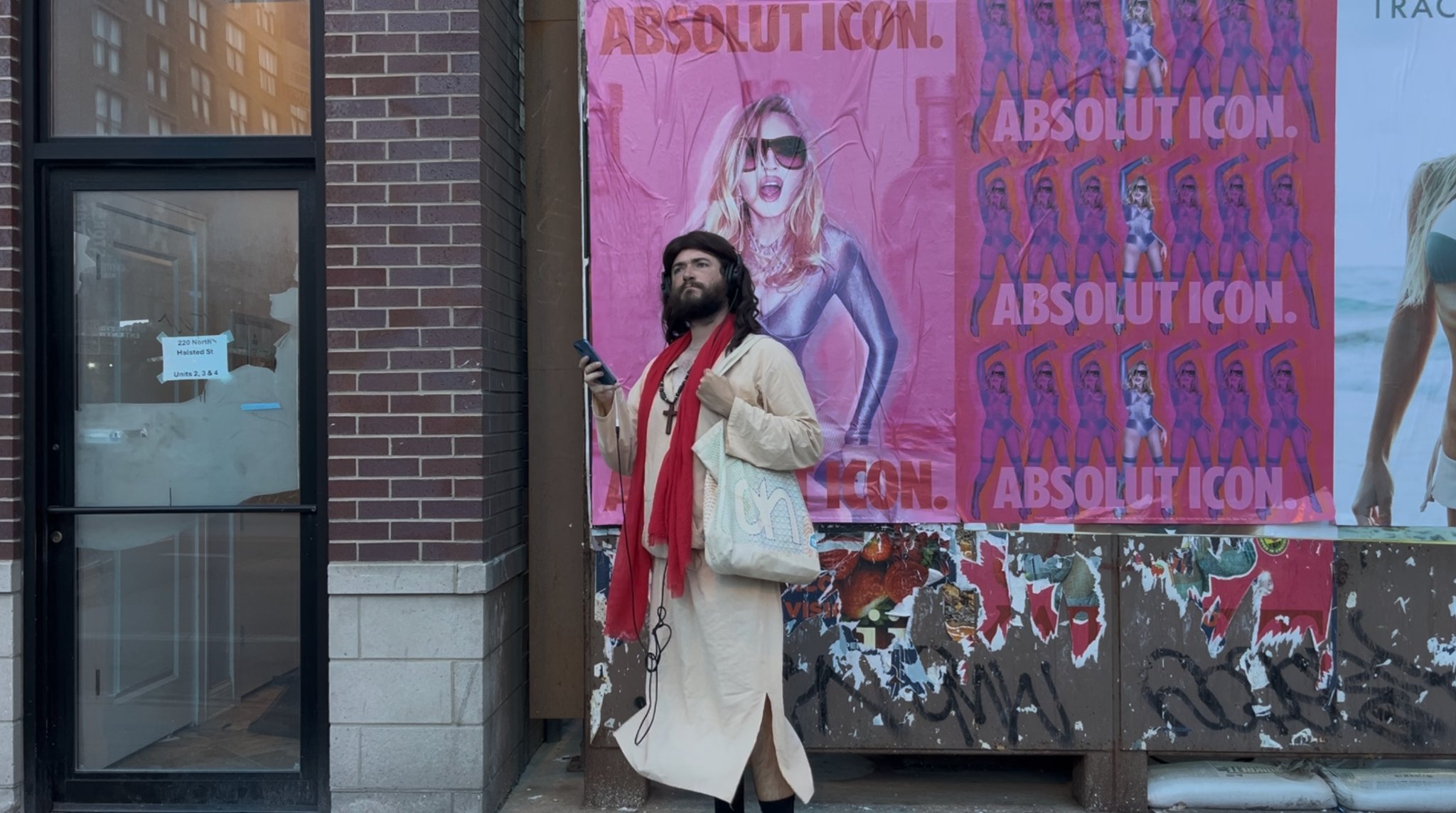
And it gets at another question that has been sitting underneath the project: what gets our attention?
War, genocide, Christian nationalism, political extremism, climate disaster, a celebrity outfit, a meme, an advertisement, a natural disaster, and somebody’s lunch can all arrive on the same Instagram feed within a minute of one another.
The scale of the event does not necessarily determine the scale of the attention.
Sometimes the thing that travels furthest is simply the image people understand fastest.
Jesus is particularly useful inside that environment because the image already carries so much meaning. Everyone recognizes the character, but everyone brings a slightly different version of the character with them.
So the film has gradually started asking some fairly simple questions.
Who does Jesus talk to? Who talks to Jesus? What would Jesus think of Earth since he came last? How does the environment aid and hinder shooting a film? And ultimately, what does it mean to life a meaningful life?
None of those questions need a speech explaining them.
That has been one of the more interesting parts of editing the film.
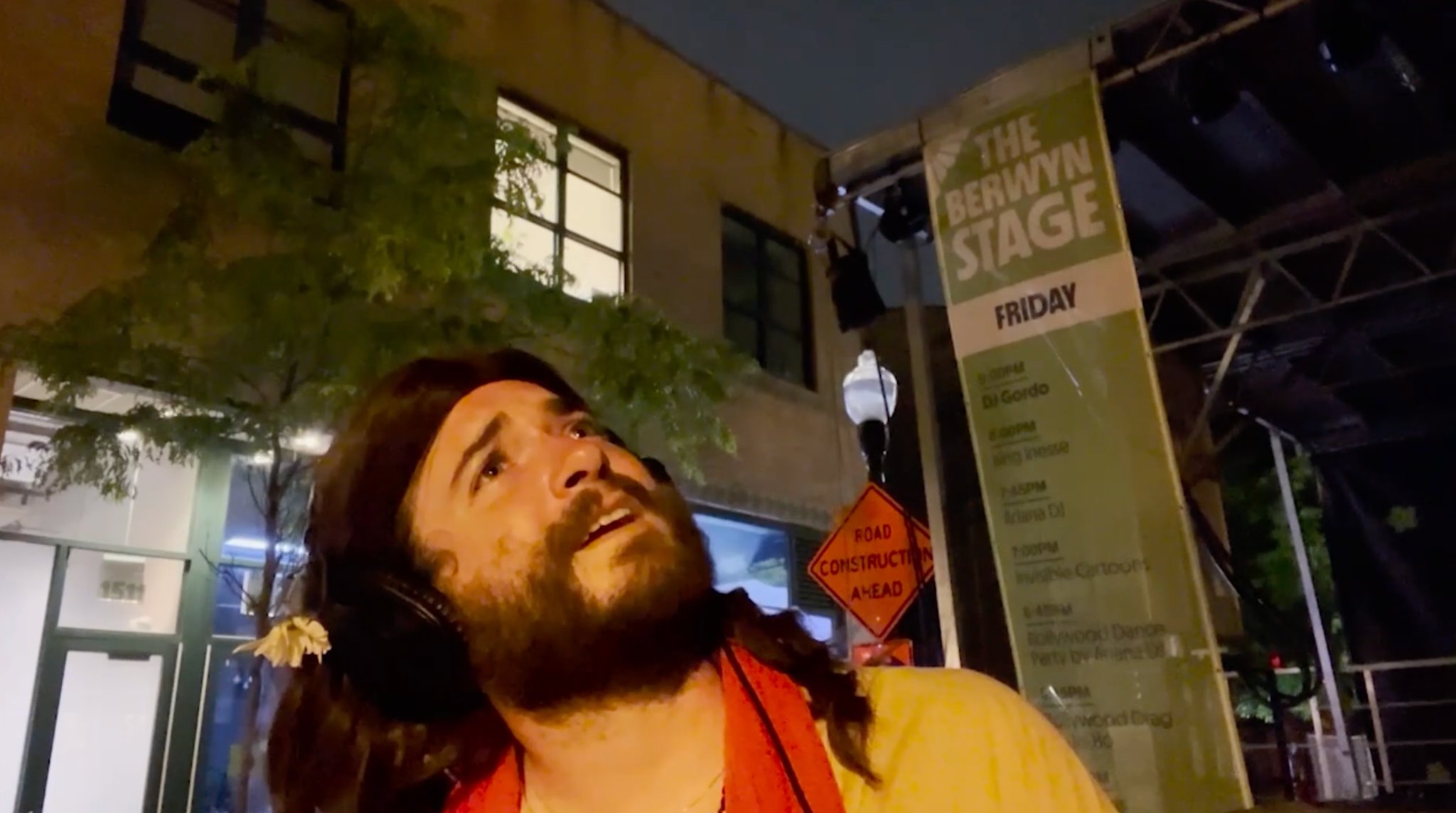
A look can answer something. A cut can create a relationship between two completely different moments. Something funny in one scene can change the meaning of something serious in another. A character can learn something without explicitly saying what was learned.
The language of filmmaking allows a story to be told without every detail needing to be shown or explained.
That may also be why this project has kept changing forms so easily.
A book created the character. Standup added another part of him. Social media gave the character somewhere else to exist. Midsommarfest provided a setting that nobody needed to build. A camera collected scenes. Editing is now finding relationships between them.
All of this has happened during a year when the basic economics of making things have also been difficult to ignore.
It does not cost very much to begin making a film anymore.
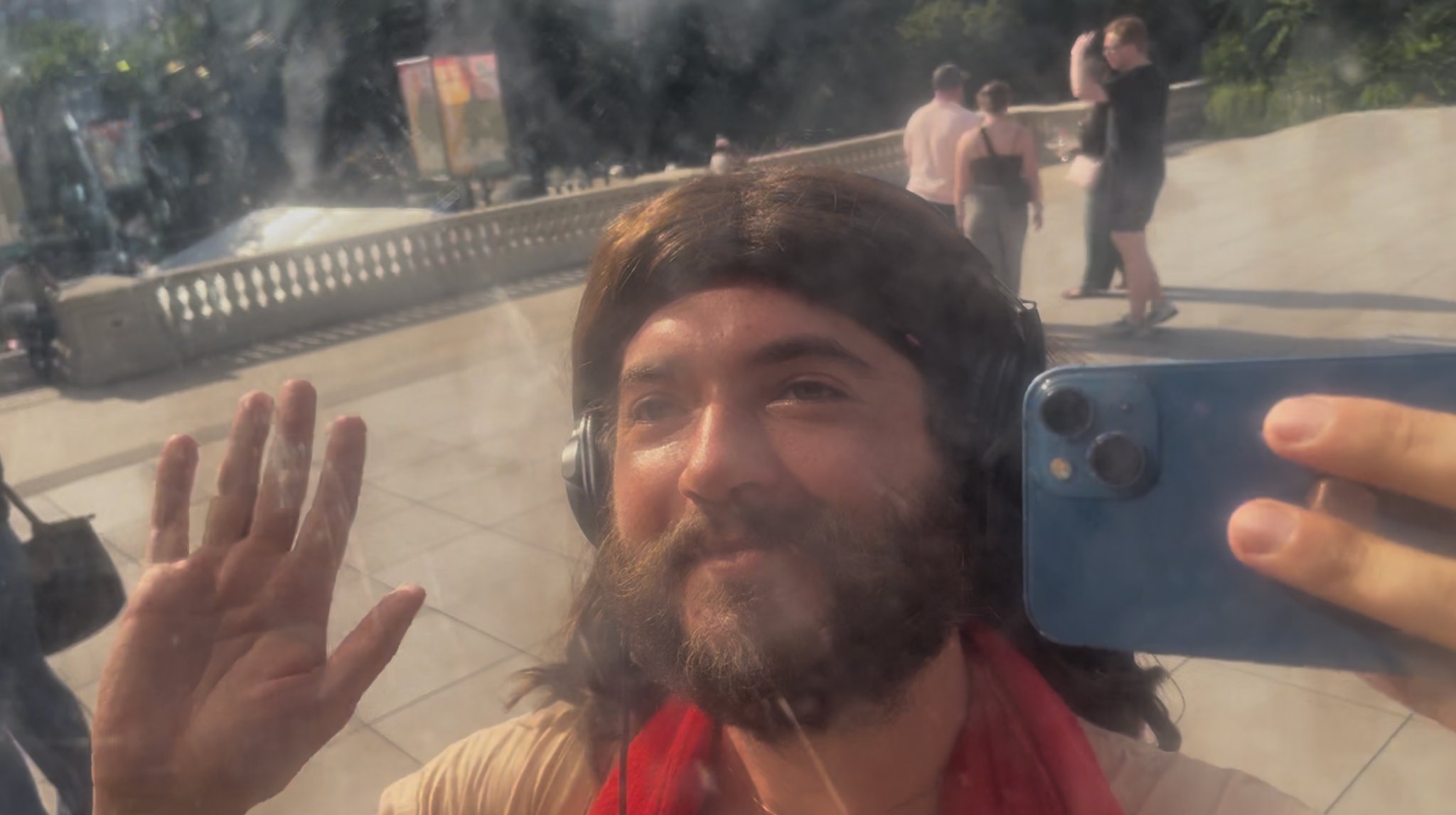
A phone or relatively inexpensive camera can shoot it. A computer already being used for other work can edit it. Music can be made at home. A book can be published without a publisher. A film can be released without a studio. An audience can encounter the work directly.
None of that means the work is easy. It doesn’t guarantee that the result will be good, or that anybody will pay attention.
It changes something more basic: the distance between having an idea and being able to try it.
That has been one of the most useful lessons of this year.
An idea that appeared while dancing at SoFo in January became a book. The book crossed into standup and social media. A street festival appeared outside, so a camera went downstairs. A collection of footage became a collection of scenes. Those scenes are now becoming a film.
I’m happy with how the story is unfolding and inspired to see how a series of scenes placed on top of a table of bubbles can become something more than the sum of its parts when viewed from afar, on a screen.
The language of filmmaking allows the story to exist between those scenes too.
That has been the most interesting part of making Jesus Christ, Diva so far.
About this post


Comments
Join the conversation.
Loading…